
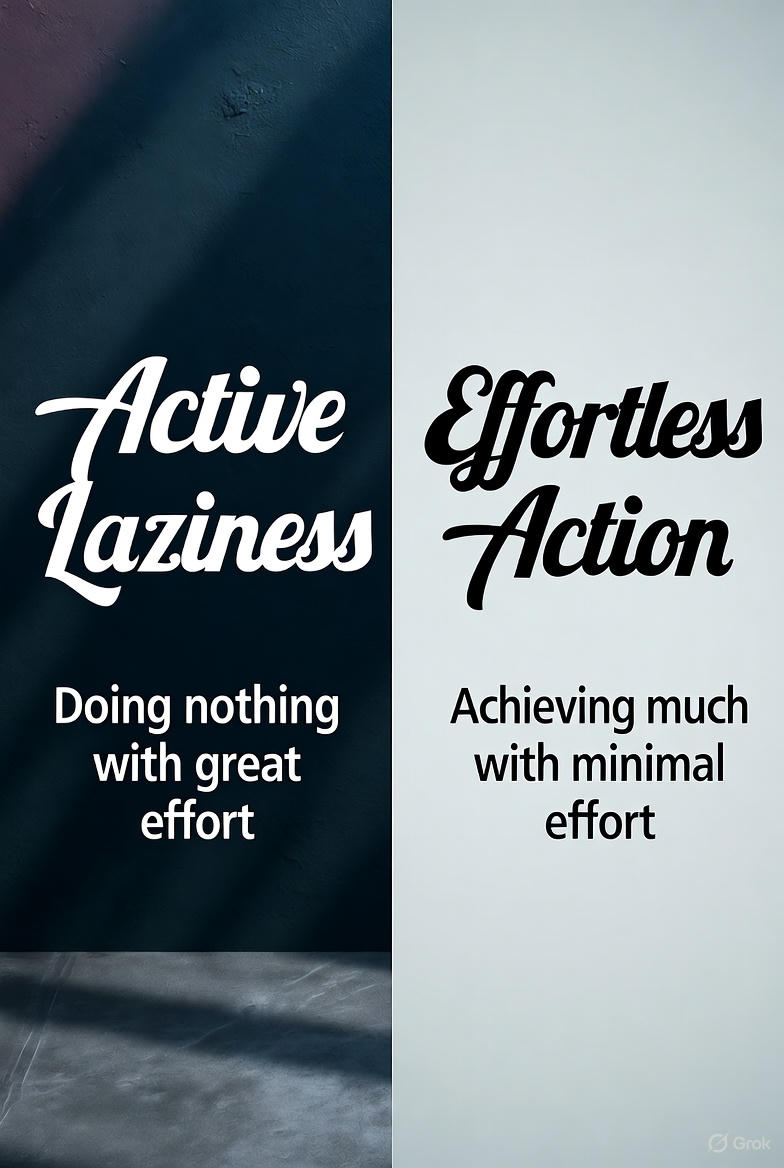
In the high-stakes world of cybersecurity, where efficiency can mean the difference between safety and breach, the ancient philosophy of Taoism offers valuable insights. However, the concept of “active laziness”—when interpreted as being perpetually busy yet accomplishing little—can undermine security efforts. Paired with “effortless effort” (or wu wei), as explored in the What’s This Tao All About? podcast, this perspective highlights how strategic action, rather than frantic inaction, strengthens protection.
Reframing Active Laziness
Taoism, as discussed in the What’s This Tao All About? podcast (Episode 2), centers on the Tao—the unnameable source of all things—promoting balance and purposeful action. Here, “active laziness” takes on a cautionary tone: it describes a state of constant motion without progress, like spinning wheels in mud. In security, this manifests as:
- Overloaded Workflows: Teams bogged down by endless meetings or redundant checks—e.g., manually reviewing every log entry—waste time without enhancing safety.
- Neglected Priorities: Being too busy to focus on critical threats, such as failing to patch known vulnerabilities, leaves systems exposed despite the hustle.
This misstep contrasts with the Taoist ideal of efficiency, showing how aimless busyness can erode security.
Effortless Effort as a Remedy
Effortless effort, or wu wei, involves achieving goals through natural, unforced action in harmony with the Tao. The podcast emphasizes avoiding struggle, a principle that can rescue security from the trap of active laziness. Examples include:
- Streamlined Defenses: Automated threat detection tools work seamlessly, addressing risks without requiring constant human oversight, embodying wu wei’s flow.
- User-Friendly Policies: Simple, intuitive security practices—like password managers—guide users naturally, reducing errors without forcing compliance.
By aligning with this principle, security becomes effective without the exhaustion of fruitless effort.
Finding Balance Amid Chaos
The danger of active laziness calls for a balanced approach, as the Tao Te Ching suggests adapting like water—yielding yet overcoming. In practice:
- Focused Action: Regular risk assessments ensure efforts target real threats, avoiding the busywork that dilutes impact.
- Mindful Culture: Building a security mindset that feels organic—integrated into daily tasks—counters the paralysis of overactivity, aligning with Taoist harmony.
Conclusion: The Taoist Path to Effective Security
Taoism warns against the pitfalls of “active laziness”—being busy yet unproductive—while championing “effortless effort” as a path to resilience. Drawing from the What’s This Tao All About? podcast, we learn that security thrives when we move with purpose, not just motion. By shedding wasteful busyness and embracing the natural flow of wu wei, we can protect systems with strength and serenity, in tune with the Tao’s timeless wisdom.
 The Half-assed Taoist
Leave a comment