
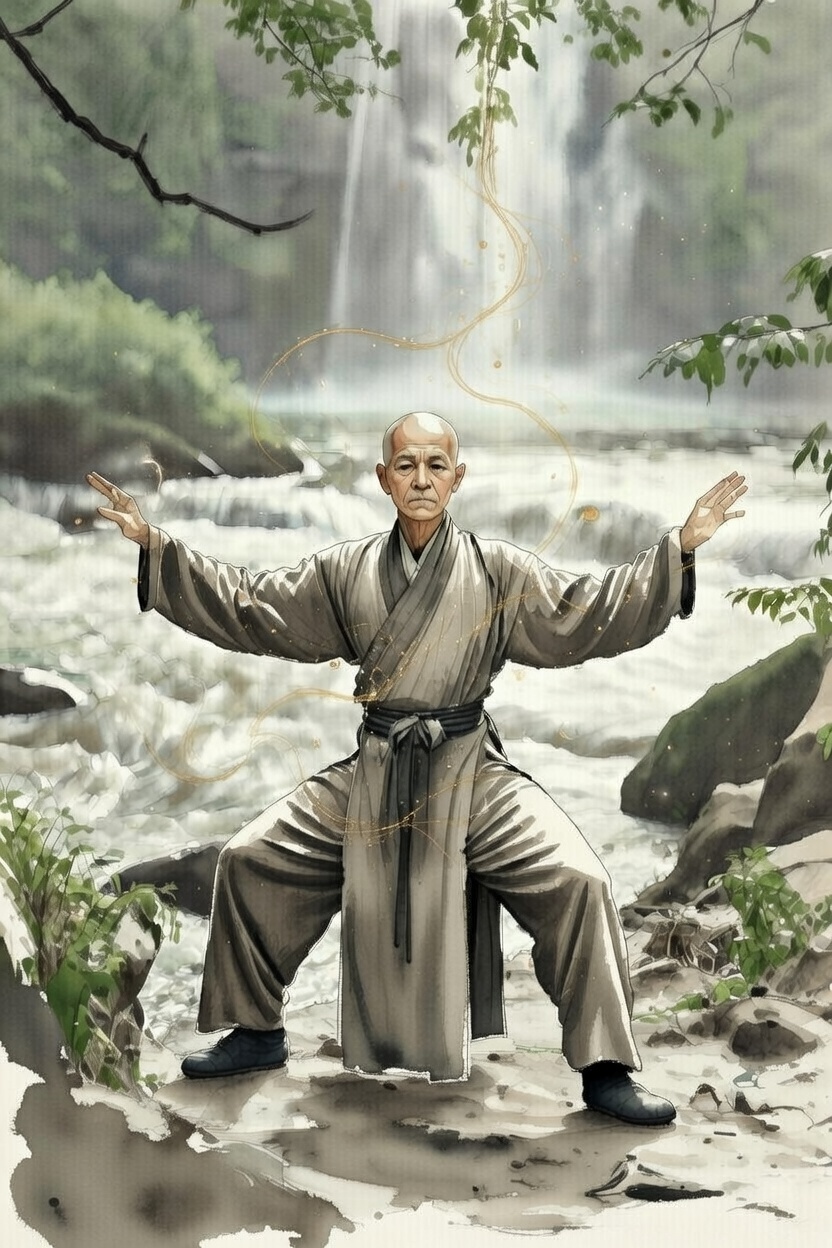
In the quiet rhythm of life, health often feels like an unyielding constant—until it isn’t. As we age or face unforeseen crises, declining health can manifest in subtle ways: persistent fatigue, weakening immunity, or chronic conditions that erode our vitality. For many, this decline culminates in serious medical issues, such as surgeries, diagnoses of illness, or prolonged recovery periods that demand a profound rebuild. Yet, Taoism offers a gentle lens for this journey, viewing health not as a battle to win but as a natural ebb and flow to harmonize with. Drawing from ancient texts beyond the Tao Te Ching, like the Zhuangzi and Liezi, we can find timeless guidance for acceptance, resilience, and renewal. This post explores how to navigate these challenges, weaving in Taoist principles to foster inner peace amid physical turmoil.
Understanding Declining Health: The Tao of Impermanence
Declining health rarely arrives unannounced; it creeps in through lifestyle strains, environmental factors, or the simple passage of time. Symptoms might include gradual loss of mobility, cognitive fog, or escalating pain from conditions like arthritis or heart disease. In my own reflections, I’ve seen friends grapple with these shifts—once-vibrant routines disrupted by fatigue or injury, leading to a sense of loss and frustration.
Taoism teaches us to embrace impermanence (wu chang) without resistance. The Zhuangzi, attributed to the philosopher Zhuang Zhou (c. 369–286 BCE), illustrates this through parables like the “Dream of the Butterfly,” where transformation blurs the lines between states of being. Just as the butterfly emerges from the caterpillar, declining health signals a shift, not an end. Zhuangzi urges us to “ride the changes” rather than cling to past vitality, reminding us that “the sage sees death and life as a single thread.” This perspective shifts our focus from fighting decline to observing it mindfully, perhaps through practices like qigong, which align breath and movement to restore subtle energies.
By accepting this impermanence, we avoid the exhaustion of denial. Instead, we cultivate ziran (naturalness), allowing the body to reveal its needs—whether through rest, nutrition, or medical intervention—without forcing unnatural haste.
Rebuilding from Serious Medical Issues: The Path of Wu Wei
Serious medical issues—a heart attack, cancer diagnosis, or major surgery—can shatter our sense of self, demanding a rebuild that encompasses body, mind, and spirit. Recovery often involves physical therapy, medication adherence, and lifestyle overhauls, but the emotional toll can be equally daunting: fear of recurrence, grief over lost abilities, or isolation during rehabilitation.
Here, Taoism’s principle of wu wei (effortless action) becomes a beacon. The Liezi, a collection of Taoist stories from the Warring States period (c. 475–221 BCE), emphasizes acting in harmony with the Tao by “doing without doing.” In one anecdote, a master archer succeeds not through strained effort but by aligning with the natural flow, much like how rebuilding health thrives on gentle persistence rather than aggressive pushing. For instance, post-surgery recovery might involve daily walks in nature, not grueling workouts, allowing the body to heal at its own pace.
Another source, the Huainanzi (compiled c. 139 BCE), integrates Taoist ideas with cosmology, advocating balance through the five elements (wood, fire, earth, metal, water). Applying this, one might rebuild by nurturing “wood” energy for growth via herbal remedies or acupuncture, countering the “metal” rigidity of illness. This holistic approach fosters resilience, transforming setbacks into opportunities for deeper self-awareness and vitality.
Integrating Taoist Practices for Lasting Harmony
To apply these insights practically, start with daily rituals rooted in Taoism. Meditation on the inner chapters of the Zhuangzi can quiet the mind’s turmoil during decline, while wu wei-inspired journaling encourages noting bodily signals without judgment. For rebuilding, incorporate tai chi, praised in the Liezi for its fluid motions that mirror the universe’s cycles, promoting strength without strain.
Remember, Taoism isn’t about passive resignation but active alignment. As the Huainanzi notes, “The wise adapt to circumstances, like water shaping to its vessel.” Seek professional care—doctors, therapists—while infusing it with Taoist wisdom for a balanced path forward.
In closing, declining health and serious medical rebuilds are part of life’s grand tapestry, invitations to flow with the Tao rather than against it. By drawing from texts like the Zhuangzi, Liezi, and Huainanzi, we uncover tools for grace amid adversity. May your journey lead to renewed harmony.
 The Half-assed Taoist
Leave a comment