
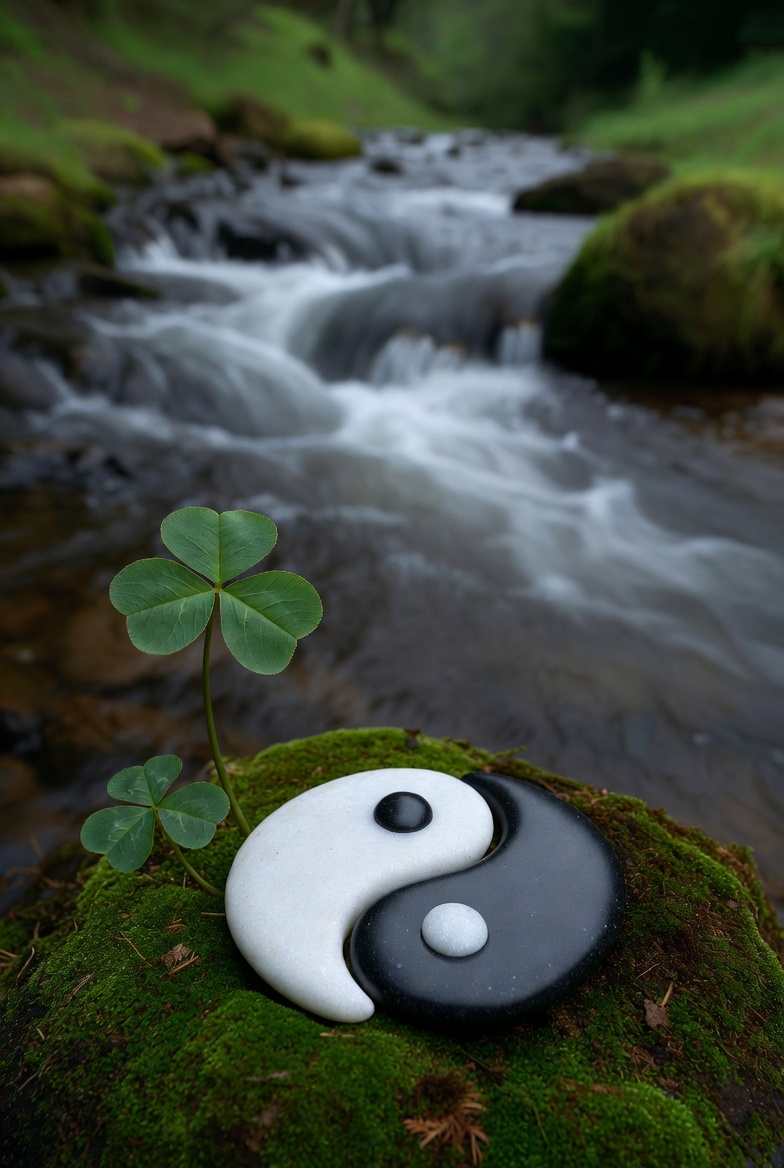
Today, March 17, 2026, the streets are alive with green. As someone raised Irish in America, St. Patrick’s Day has always been a riot of color, noise, and unapologetic joy—parades thundering down Fifth Avenue, Chicago River turned emerald, shamrocks pinned to every lapel, and pints raised to shouts of “Erin go Bragh!” It’s the one day a year when my heritage steps into the spotlight with loud, cheerful exuberance. Yet walking the Taoist path has taught me to notice the beautiful tension between that outward explosion and the inward, effortless flow of the Tao. Both traditions shape who I am, and today feels like the perfect moment to explore how they contrast—and how they quietly complement each other.
The Irish-American Side: Bold Celebration and Cultural Pride
Culturally, American St. Patrick’s Day is pure yang energy—loud, communal, and larger-than-life. Families gather for corned beef and cabbage (a dish more American than Irish), rivers are dyed green, and parades turn entire cities into moving festivals. The emphasis is on visible pride, shared laughter, and letting loose. It’s a day to wear your heritage on your sleeve—literally.
In written works, this spirit shines in the old Irish blessings passed down through generations: “May the road rise up to meet you, may the wind be always at your back…” These lines brim with warmth, goodwill, and outward-facing optimism. W.B. Yeats captured the same emotional fire in poems like “The Lake Isle of Innisfree,” where the heart longs for home, belonging, and the beauty of rooted identity.
The Taoist Side: Quiet Flow and Natural Simplicity
By contrast, Taoism invites us to move like water—soft, yielding, and never forced. Culturally, its practices emphasize harmony with nature: morning tai chi in a park, simple meals eaten mindfully, or quiet reflection under a tree rather than a crowded parade. There is no single “Taoist holiday” demanding spectacle; instead, every day is an invitation to live in balance.
The written canon drives this home. In the Tao Te Ching, Laozi writes, “Nothing in the world is as soft and yielding as water. Yet for attacking the hard and strong, nothing is better” (Chapter 78). Zhuangzi’s parables, such as the “useless tree” that survives precisely because it stands out so little, teach that true strength often hides in humility and non-striving. The message is clear: celebrate without excess, belong without clinging.
Where the Traditions Meet—and Where They Diverge
The contrasts are sharp yet illuminating:
- Outward spectacle vs. inward presence: Irish-American St. Patrick’s Day explodes in parades and parties (yang), while Taoism gently pulls us toward stillness and wu wei—effortless action that needs no spotlight.
- Identity through heritage vs. identity through detachment: American Irish pride celebrates a fixed cultural story; Taoism reminds us that all labels are temporary, like the seasons, and true freedom comes from flowing beyond them.
- Abundance and revelry vs. moderation and simplicity: Green beer and corned beef can tip into excess, whereas the Tao Te Ching gently asks, “Know when enough is enough.”
Yet the two are not enemies. The vibrant joy of St. Patrick’s Day can be held lightly, Taoist-style—enjoy the parade with full presence, sip the pint with gratitude, and remember that even the loudest celebration will pass. The shamrock’s three leaves mirror yin-yang balance: heritage, joy, and impermanence all intertwined.
This year I’ll still wear my green. I’ll still cheer at the parade. But I’ll also begin the day with a short meditation, feeling the same life force that flows through Irish rivers and Taoist streams. My Irish-American heart celebrates loudly; my Taoist spirit smiles softly. Together they remind me that the wisest way to honor any tradition is to live it with both passion and peace.
Sláinte—and may the Tao flow gently through your green-clad day.
 The Half-assed Taoist
Leave a comment